
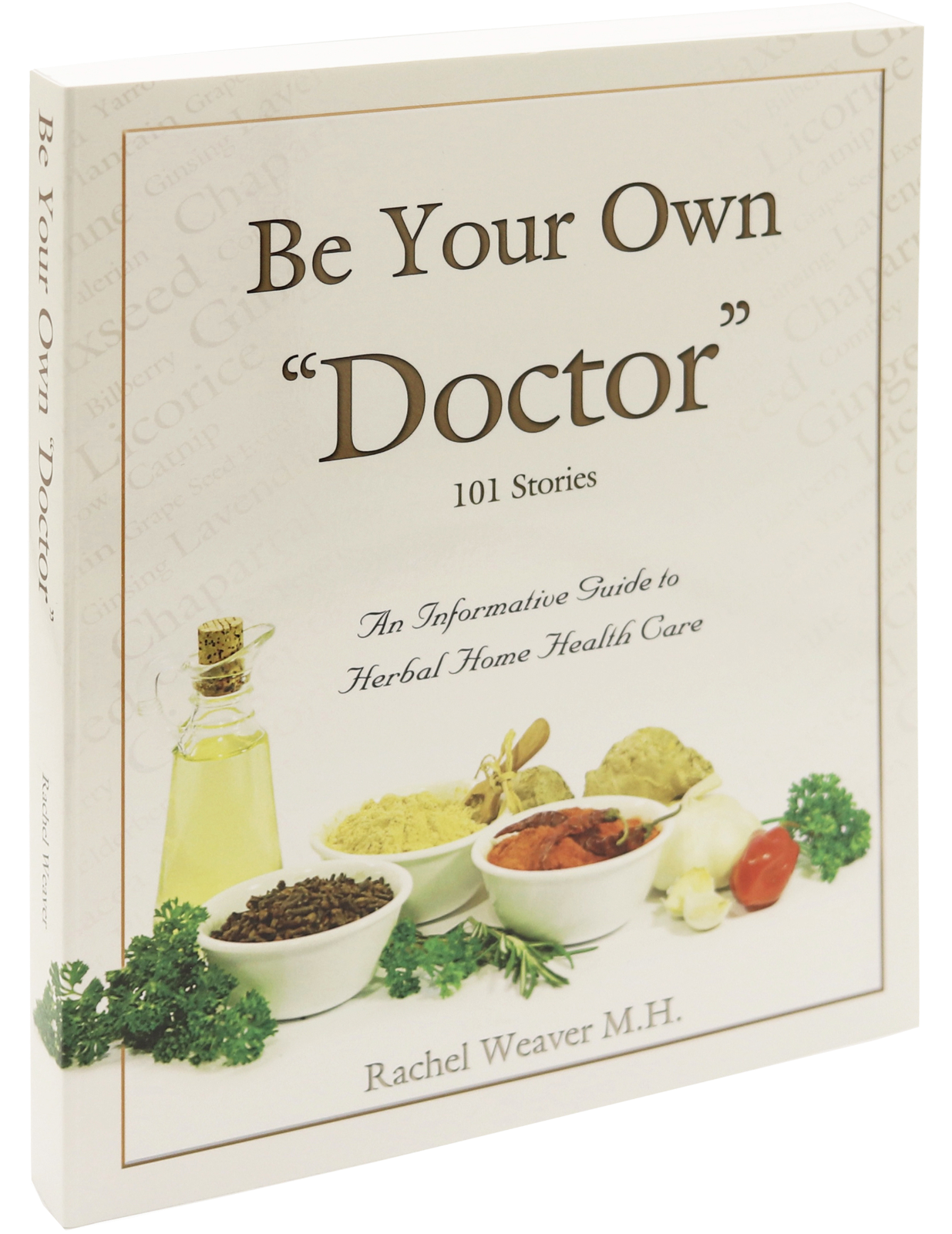
Be Your Own Doctor is the book that started Rachel Weaver’s series, and it is still the one most people ask about. If you have heard the title from a friend, seen a worn copy on a kitchen shelf, or found it listed under “Rachel Weaver herbal book,” here is what is actually between the covers — and how to tell whether it is the right place to start.
Who wrote it, and why
Rachel Weaver, M.H. was a Master Herbalist, a midwife and a mother of nine. By the time she sat down to write, she had thirty-two years of experience caring for her own family and twelve grandchildren, and a steady stream of neighbors coming to her door with everything from chest congestion and stomach troubles to minor accidents. For at least six years people had asked her to put what she knew into a book they could keep nearby. She finally did, partly to answer those requests and partly to make sure her children and grandchildren would not lose the practical wisdom that is so easily dropped between generations. With her characteristic humor, she also hoped a book on the shelf might mean a quieter telephone.
The book was first published in 2010 by Share A Care Publications, the Weaver family’s publishing house, then in Reinholds, Pennsylvania and now in Gap, Pennsylvania, which still prints it today. You can read more about Rachel on her author page.
The 101 stories
The subtitle — 101 Stories: An Informative Guide to Herbal Home Health Care — is a fair description of how the book works. Rather than a dry reference list, Rachel teaches through stories drawn from her family and community: what the complaint was, what simple thing she tried first, and what happened. The stories are what make the book easy to remember in the middle of the night when someone is sick and you cannot think straight. Readers often say they recall “the one about the …” long before they could quote a dosage.
Herbs and kitchen ingredients, not products
Rachel’s stated purpose was to help you care for your family and make your own herbal medicines, not to sell you herbal products. The book leans on common herbs and ingredients that are already in most kitchens, and on simple, inexpensive ideas that are kind to both your health and your budget. She encourages readers to keep a few useful herbs and supplies on hand so they are prepared for everyday illnesses, minor accidents and first aid before they happen.
Teas, tinctures and salves
A good part of the book’s usefulness is that it shows you how to prepare things, not just what they are for. There are instructions for making herbal teas, tinctures and salves at home, along with discussions of home health care in general and — importantly — of recognizing when professional care is needed. Rachel always recommended the simplest remedies first, and she was clear that some situations, such as suspected appendicitis, call for urgent medical attention.
A Christian perspective
The book reflects Rachel’s Christian faith and her conviction that God created our bodies to heal when given the tools they need. It encourages readers to take responsibility for their own health and their family’s, and it does not include New Age content — a point many readers specifically look for.
Who the book is for
- Parents and grandparents who want to handle everyday illnesses at home with confidence.
- Anyone building a home remedy shelf and wanting to know what to keep on it.
- Readers who learn best from real examples rather than tables.
- Families who prefer a plain, faith-respecting approach to natural health.
The details
- 336-page paperback
- First published 2010 · ISBN 978-0-9712669-0-2
- Also available as a Kindle e-book on Amazon; the paperback comes from Share A Care, the original publisher
- Companion volumes: Be Your Own Doctor II, Back Yard Pharmacy and Be Your Child’s Pediatrician
Order Be Your Own Doctor direct from the publisher, or get the set of all four books with free shipping in the United States.